
Material & Joint Comparisons
Side-by-side differences between the materials and joints people confuse most often, judged under specific conditions.
Why comparisons need conditions
“Which is better?” is rarely answerable without adding “for what?” A material that paints beautifully may be a poor choice for a damp room, and a joint that is superb for drawers may be unnecessary for a simple frame.
The comparisons here are written around specific uses: painted furniture, shelving, moisture exposure, finishing, and weight.
Not just two pages stitched together
A useful comparison explains the actual point of difference, not just each material in turn. These pages put the two options next to each other on the properties that decide real choices, then give a clear recommendation for each common scenario.
Where performance varies by grade or manufacturer, that is stated rather than smoothed over.
All comparisons
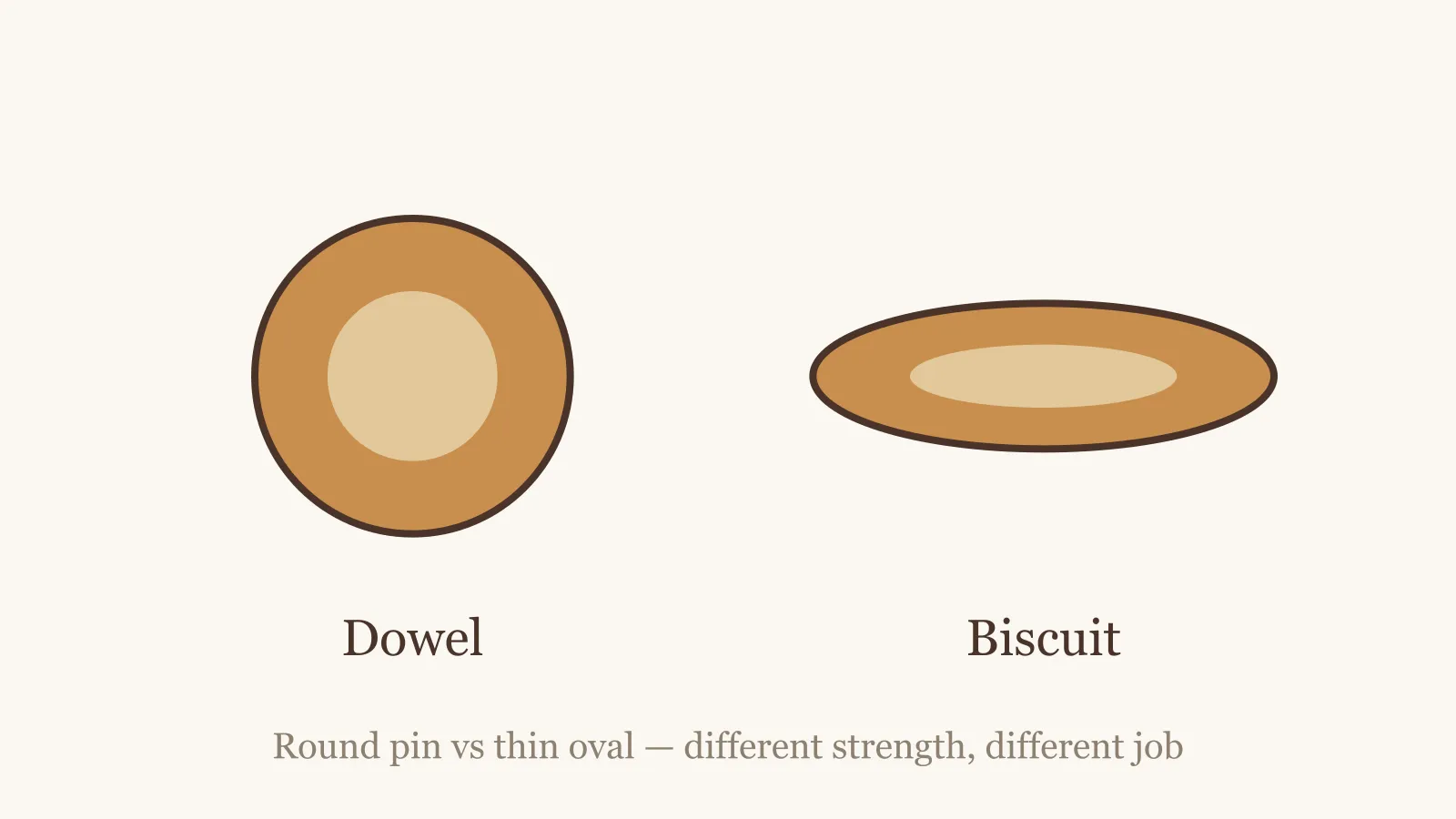
Dowel vs Biscuit Joint: What's the Difference?
Dowels locate and reinforce matching holes; biscuits align parts in elongated slots. Select by the assembly and loading, not a universal strength ranking.
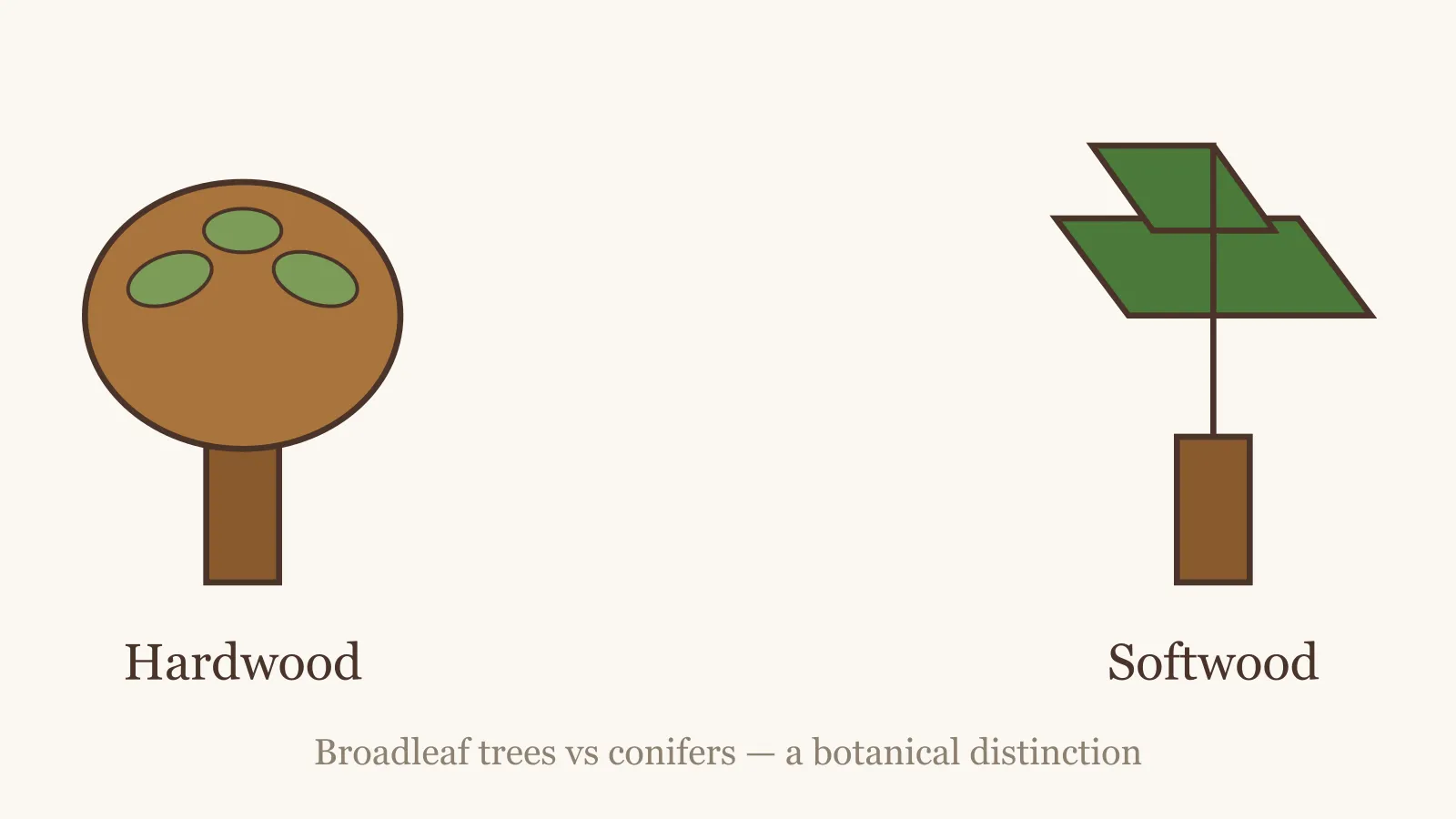
Hardwood vs Softwood: What's the Difference?
Hardwood and softwood are botanical groups. Choose lumber by species, grade, moisture, grain, and the needs of the component.
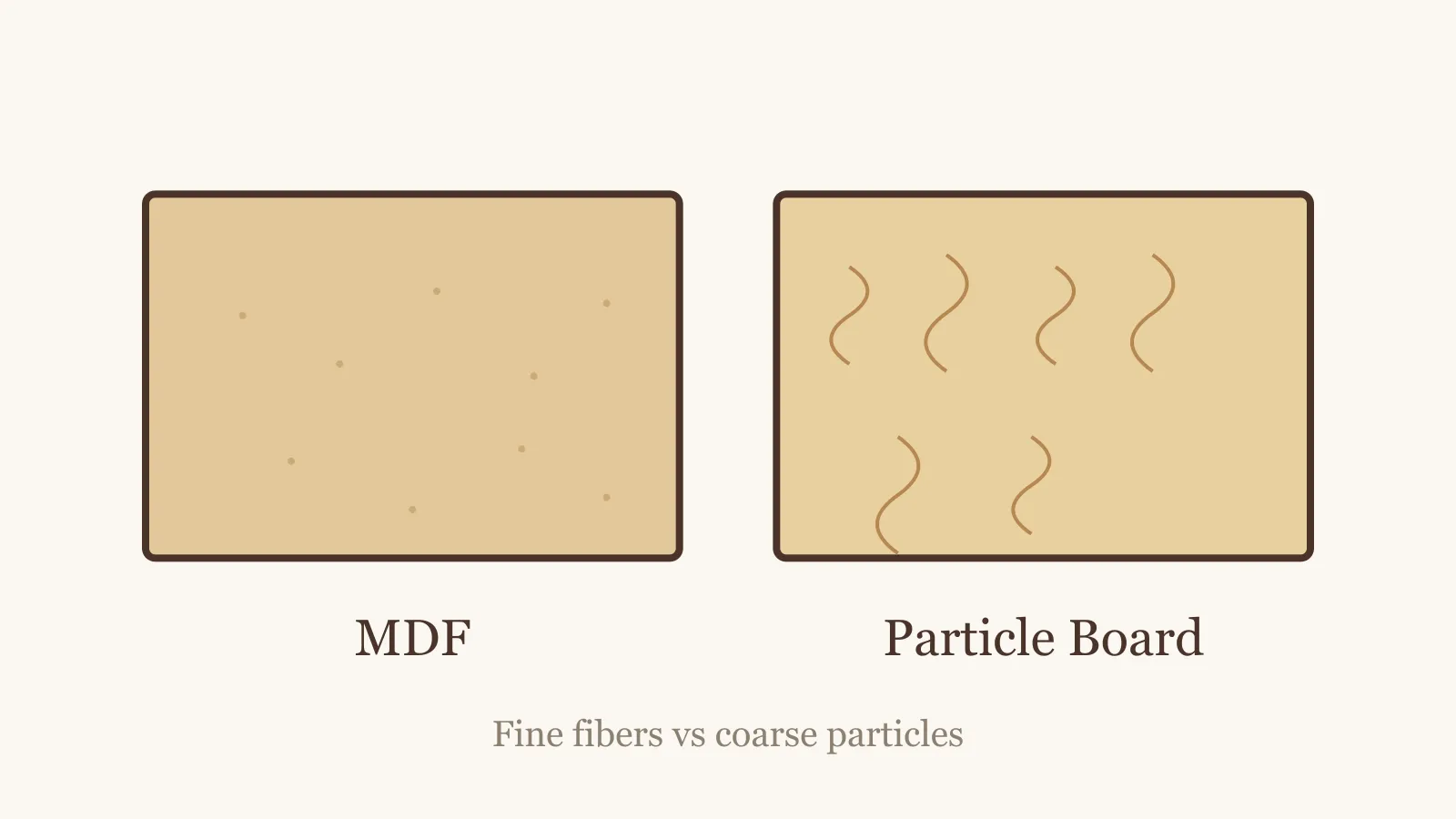
MDF vs Particle Board: What's the Difference?
MDF uses fine fibers and suits painted profiles; particle board uses particles and is widely used beneath decorative faces. Evaluate the board, surface, and connections separately.
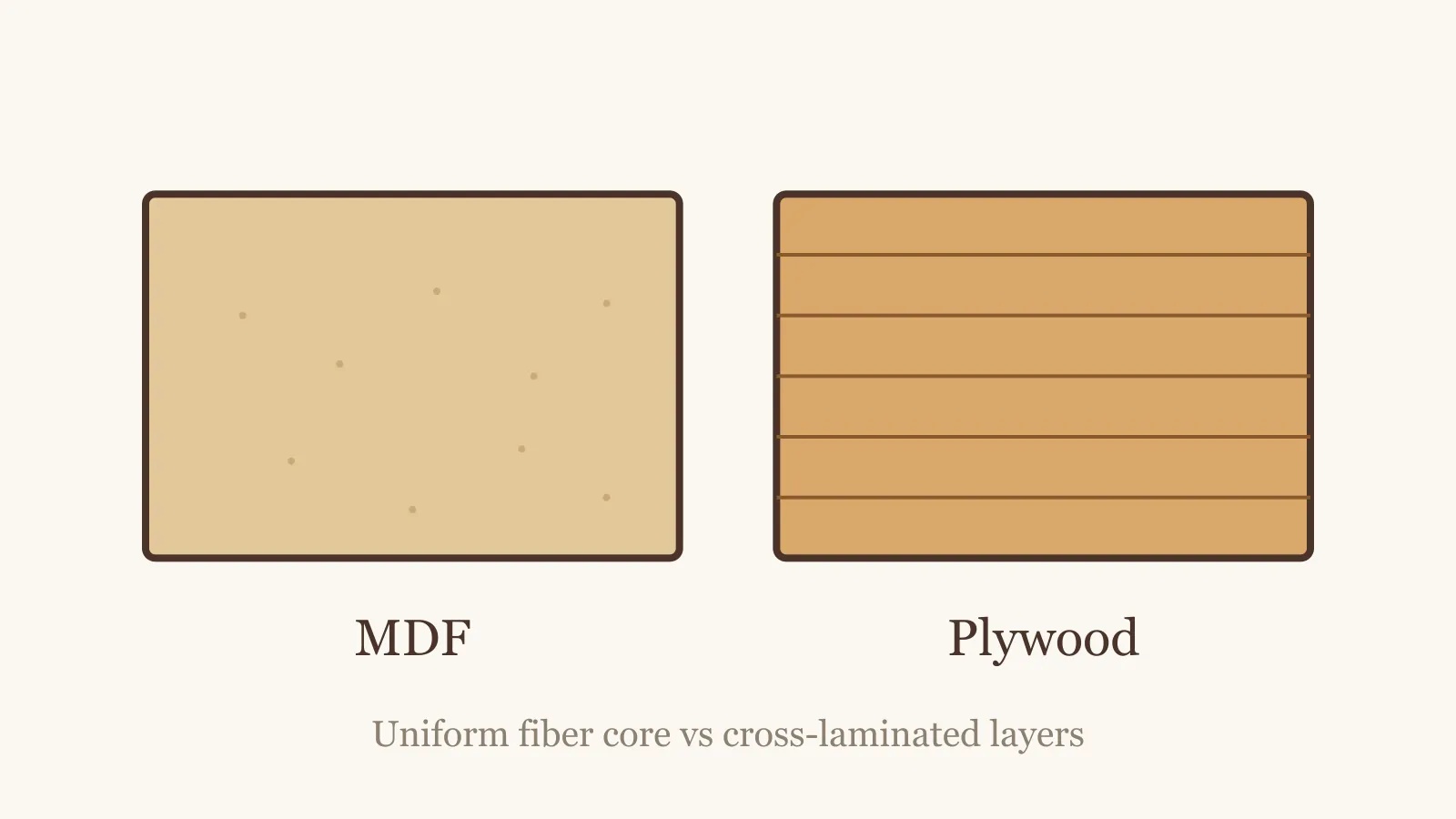
MDF vs Plywood: What's the Difference?
MDF offers a grain-free surface for paint and profiles; plywood offers cross-laminated veneers for many cabinet and fastened assemblies. Grade and component design decide the choice.
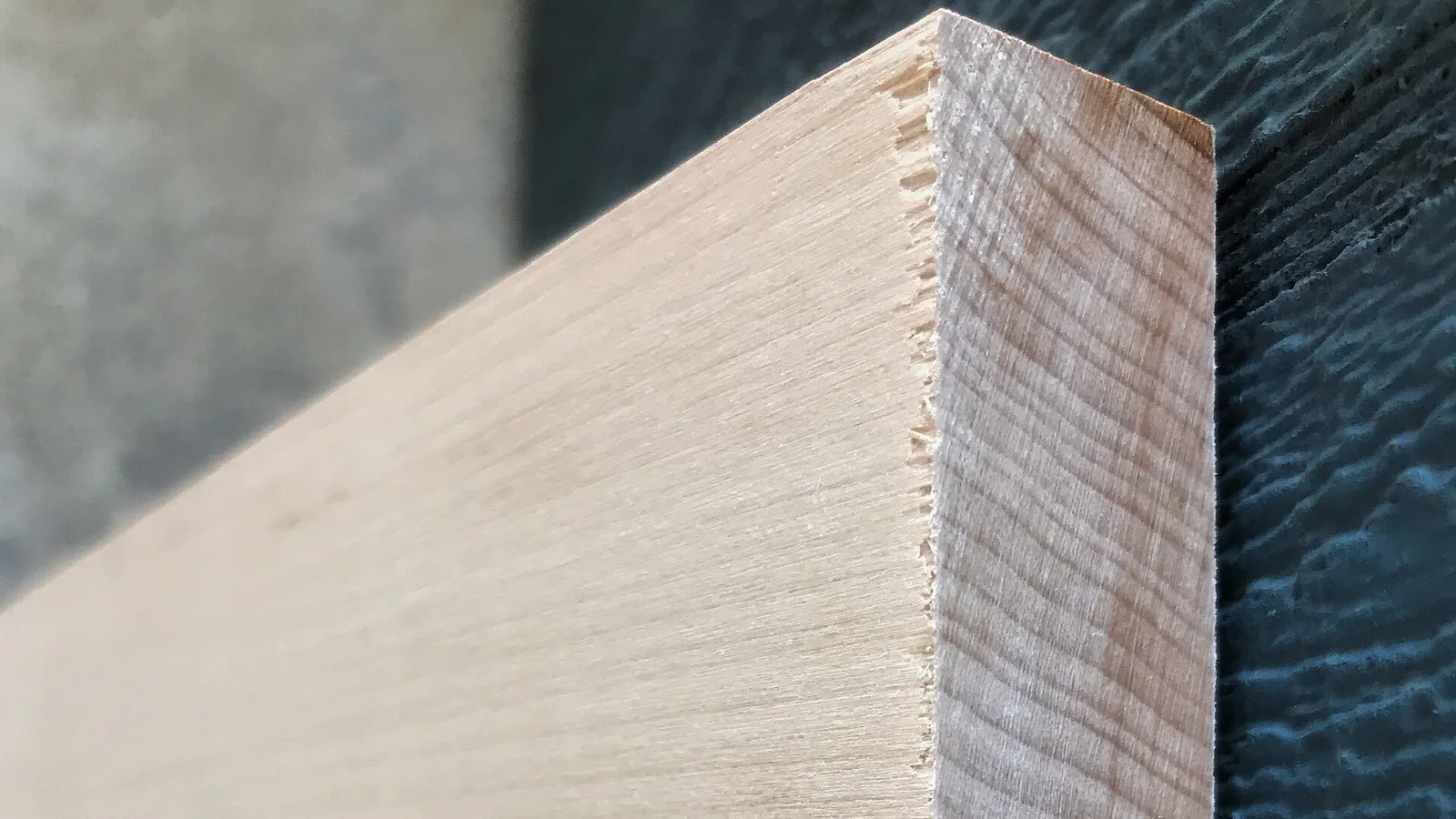
Plain-Sawn vs Quarter-Sawn Timber: Grain, Uses & Cost
Plain-sawn and quarter-sawn describe how a board's wide face is oriented to the log's growth rings.
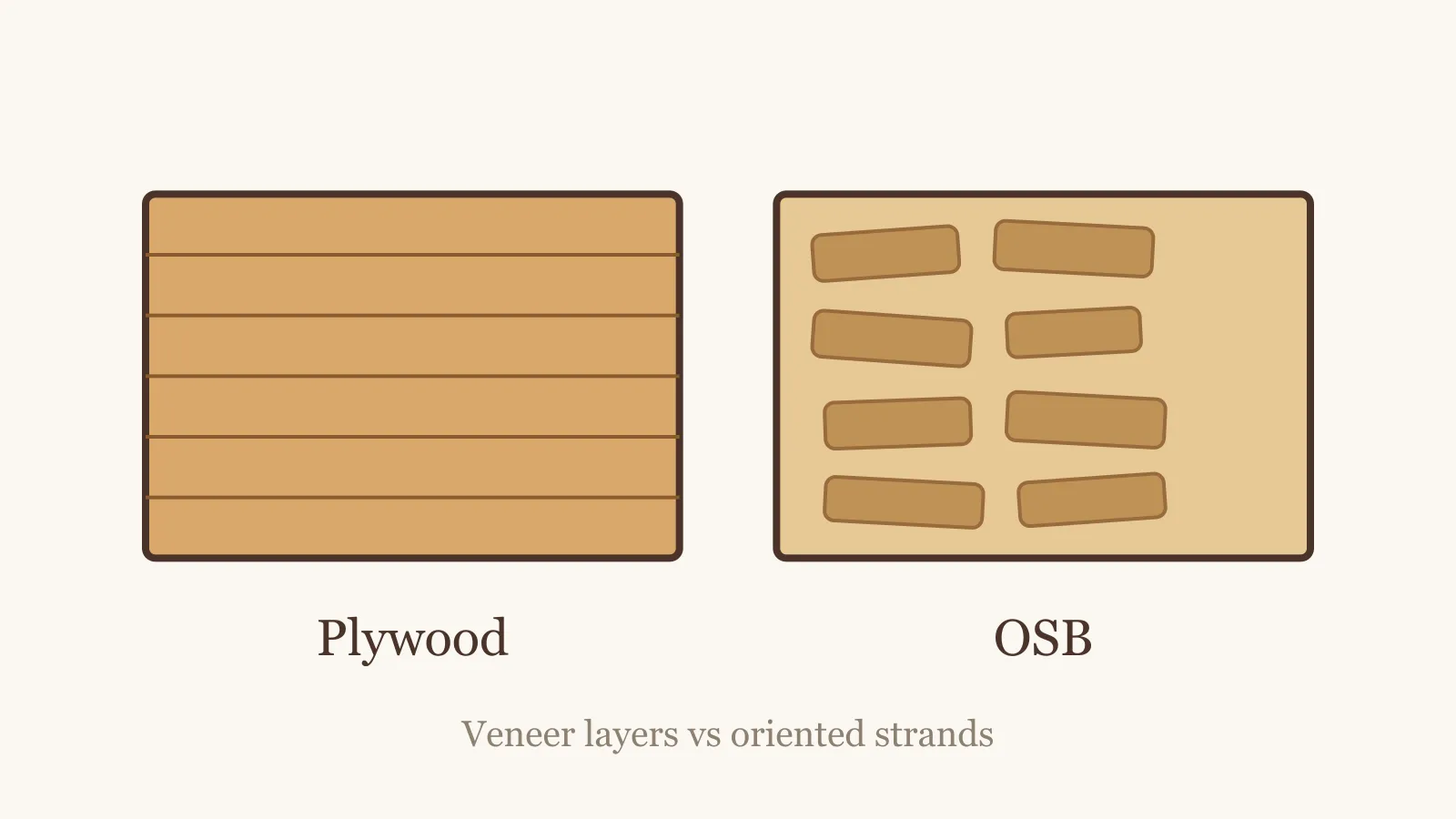
Plywood vs OSB: What's the Difference?
Plywood uses veneers and OSB uses oriented strands. Both can be structural; select the required rating, exposure class, surface, and installation details.
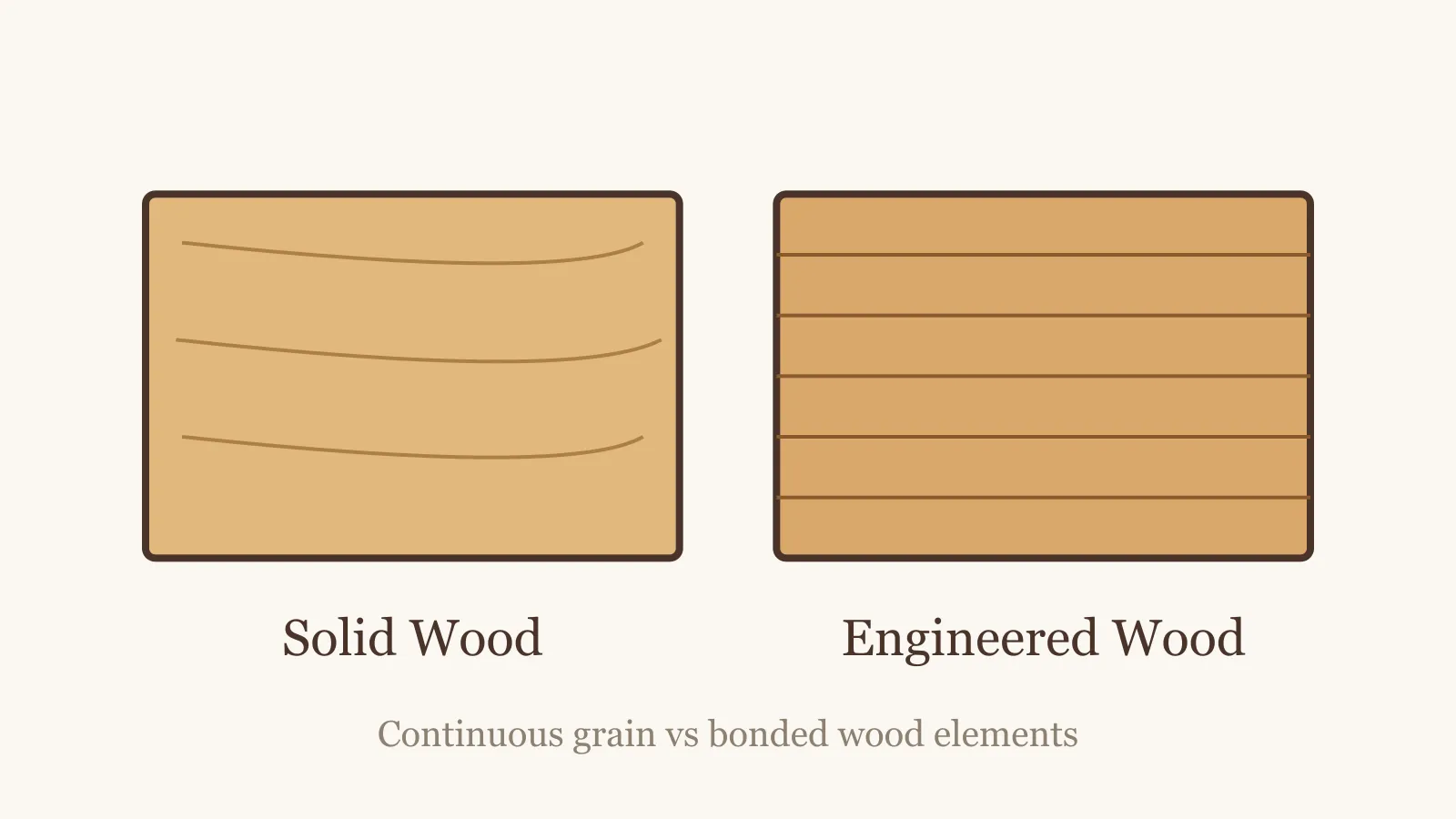
Solid Wood vs Engineered Wood: What's the Difference?
Solid wood has continuous grain through the component; engineered wood covers many bonded products. Compare the exact core, surface, and assembly.
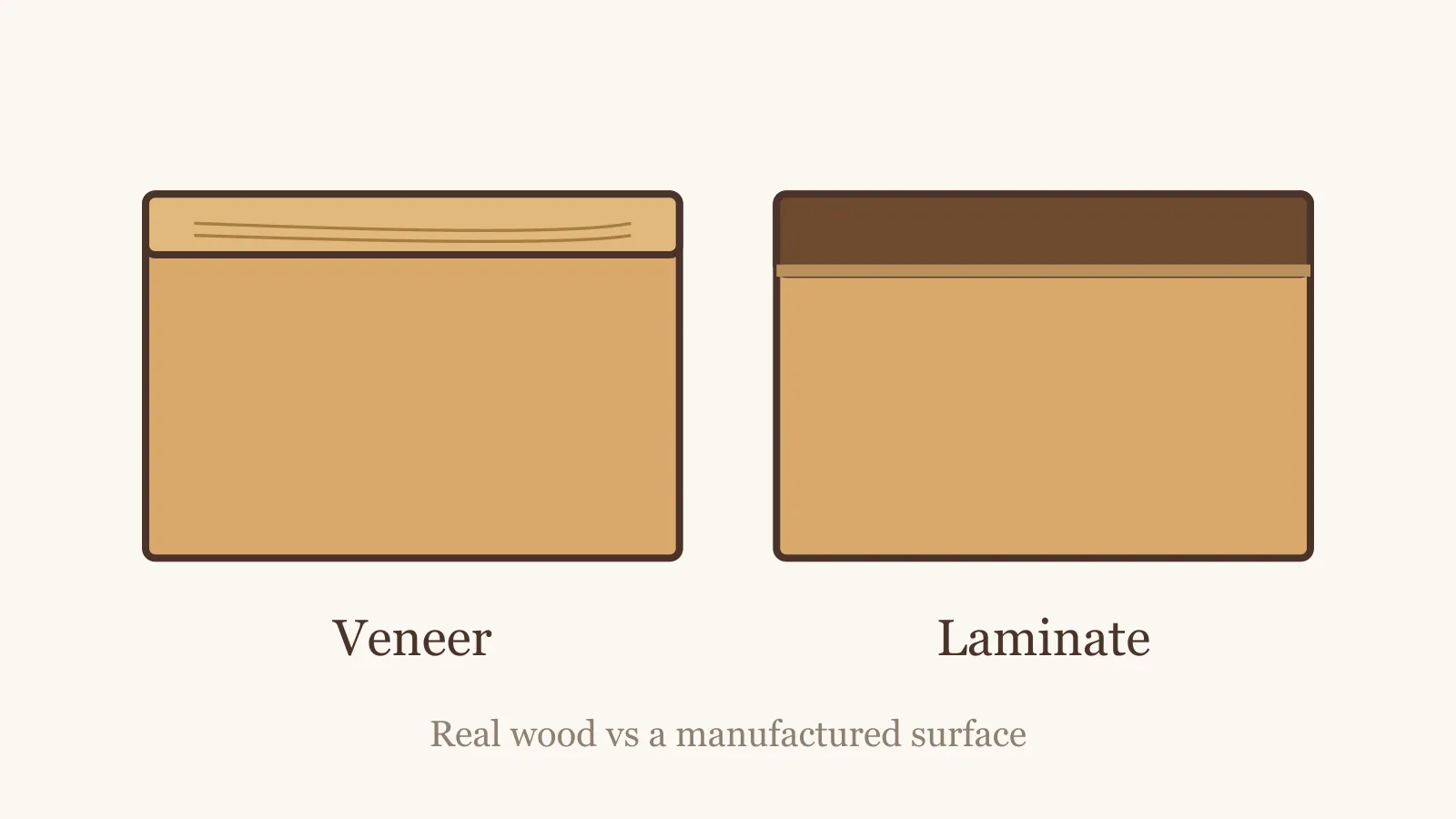
Veneer vs Laminate: What's the Difference?
Veneer is real wood; decorative laminate is a manufactured facing. Specify the exact surface, core, edge treatment, and intended exposure.