
Quick Difference
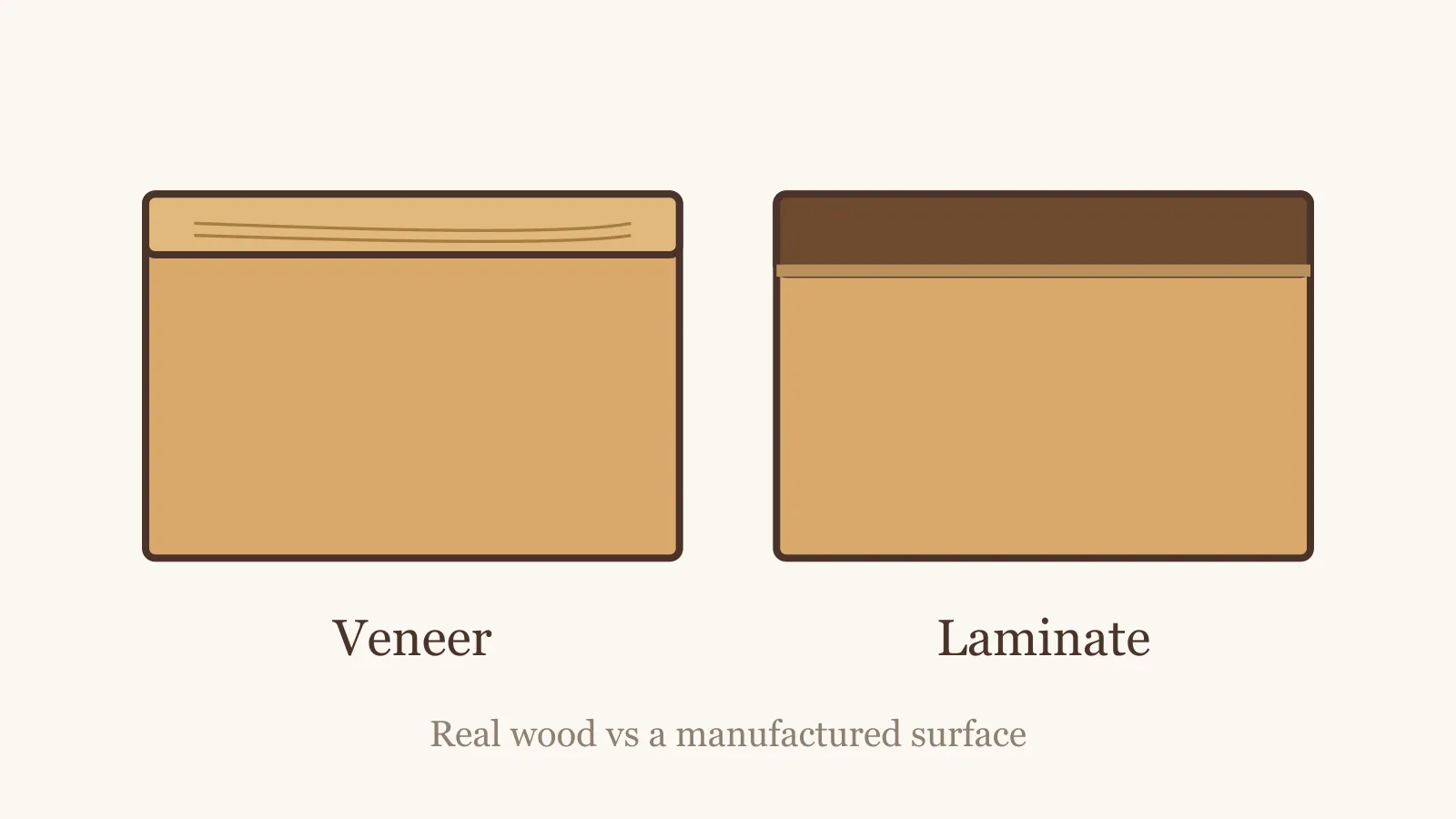
Wood veneer is a thin sheet of real wood. Decorative laminate is a manufactured facing; conventional high-pressure laminate uses resin-impregnated paper layers. Both can cover the same MDF or particle board core, so neither surface name tells you what is underneath.
Choose veneer when real wood figure and a wood-finishing approach matter. Consider a suitable laminate when a factory-finished surface, repeatable color, and specified wear performance matter. The panel’s edges, adhesive, substrate, and exposure remain part of either decision.
Define the Product Before Comparing It
Laminate is used loosely in furniture descriptions. High-pressure laminate, thermally fused melamine-faced board, decorative foil, and laminate flooring are different constructions. This comparison mainly concerns wood veneer and conventional high-pressure decorative laminate used on furniture and work surfaces.
Standard thin laminate sheets usually need a supporting substrate. Compact laminate is a different, thicker product with its own fabrication rules. Ask which construction is supplied rather than applying every statement about one to all products called laminate.
Appearance: Inspect More Than the Pattern
Veneer carries the grain and figure of its wood species. Slicing method, veneer matching, finish, and lighting affect the result. Adjacent leaves can be arranged for symmetry or continuity, which is why a carefully matched veneered panel can look quite different from randomly assembled solid boards.
Laminate can provide solid colors, printed wood patterns, and textured finishes. Some textures are visually convincing, so identifying a surface from a photograph alone is unreliable. Look for the maker’s specification and inspect a cut edge or inconspicuous opening where possible.
| Priority | Veneer question | Laminate question |
|---|---|---|
| Natural figure | Which species, cut and matching pattern? | Is a printed pattern acceptable, including any repeat? |
| Daily wear | What finish protects the wood? | Which grade and use category are specified? |
| Later restoration | How thick is the veneer, and has it been sanded? | Can the facing or whole component be replaced? |
| Wet-area use | How are finish, edges and substrate protected? | How are seams, cutouts and substrate protected? |
| Consistent replacements | Can wood color and figure be matched later? | Is the decor, texture and grade still available? |
Wear and Heat Depend on the Surface System
Veneer itself is wood, but hands, cleaners, and spilled liquids usually encounter its finish first. A hard finish and a soft oil finish can behave very differently on the same veneer. Avoid a simple claim that all veneer scratches more readily than all laminate.
Laminate products have specified applications and care instructions. A vertical decorative grade should not be assumed suitable for every horizontal work surface. Neither laminate nor a wood finish is a universal heat shield: follow the maker’s guidance and use protection for hot objects.
For a desk, inspect wear resistance, edge comfort, cable openings, and cleaning requirements. For a cabinet door, color, fingerprint visibility, edge quality, and hinge attachment may matter more than a countertop-style abrasion comparison.
Repair and Refinishing Limits
A veneered surface may allow localized finish repair or renewal, but sanding is not automatically safe. The remaining wood can be extremely thin, especially at corners or after previous restoration. Before stripping or sanding, identify the coating and test an inconspicuous area. Avoid promising that any real-wood face can be refinished repeatedly.
Laminate has a factory-made decorative surface. Sanding it does not reveal another usable layer of the same pattern. Chips or deep burns may require a compatible cosmetic repair, replacement facing, or replacement component. Painting laminate is a separate coating process and does not recreate the original factory surface.
Moisture: Inspect the Edges and Core
A laminate face may resist routine spills while water enters at a seam, sink cutout, damaged edge, or fitting hole. A swollen core can lift an intact-looking surface. Veneered panels have similar substrate and bond-line considerations, even when the wood face is well finished.
Check edge banding and the manufacturer’s sealing details. Neither material should be selected for a bathroom or kitchen simply because a sample survives a quick wipe with water.
Make the Specification Useful
For veneer, request the species, cut, matching, substrate, edging, and finishing system. For laminate, request the product type, grade, decor, texture, substrate, adhesive system, and edge detail. For both, ask about intended exposure and repair options.
Compare a complete veneered panel with a complete laminated panel. A premium laminate can cost more than an inexpensive veneer, and a poor substrate can undermine either face. The best choice is the construction that suits the work, wear, and maintenance you expect.
References
The references distinguish wood bonding from manufactured decorative surfaces. Follow the specific product’s fabrication and care instructions.