
Quick Answer
Wood veneer is a thin layer of real wood that is bonded onto a substrate, such as MDF, plywood, or particle board. It provides a genuine wood surface while the core provides panel size and stability. Veneer is real wood — unlike laminate, which is a manufactured decorative surface — but it is far thinner than solid lumber and behaves differently in use.
How Is Wood Veneer Made?
Veneer is produced by slicing or peeling a log into thin sheets. In slicing, a prepared log section is cut in thin layers along its grain, producing sheets with the characteristic figure of the species. In rotary peeling, a log is rotated against a blade and unwound into a continuous sheet.
The resulting veneer is dried, graded, and then bonded to a substrate with adhesive under pressure. The substrate does the structural work; the veneer supplies the visible wood surface.
The thickness, species, cut, and matching of the veneer all vary. Two veneered panels of the same species can look very different depending on how the veneer was cut and laid.
What Does Wood Veneer Look Like?
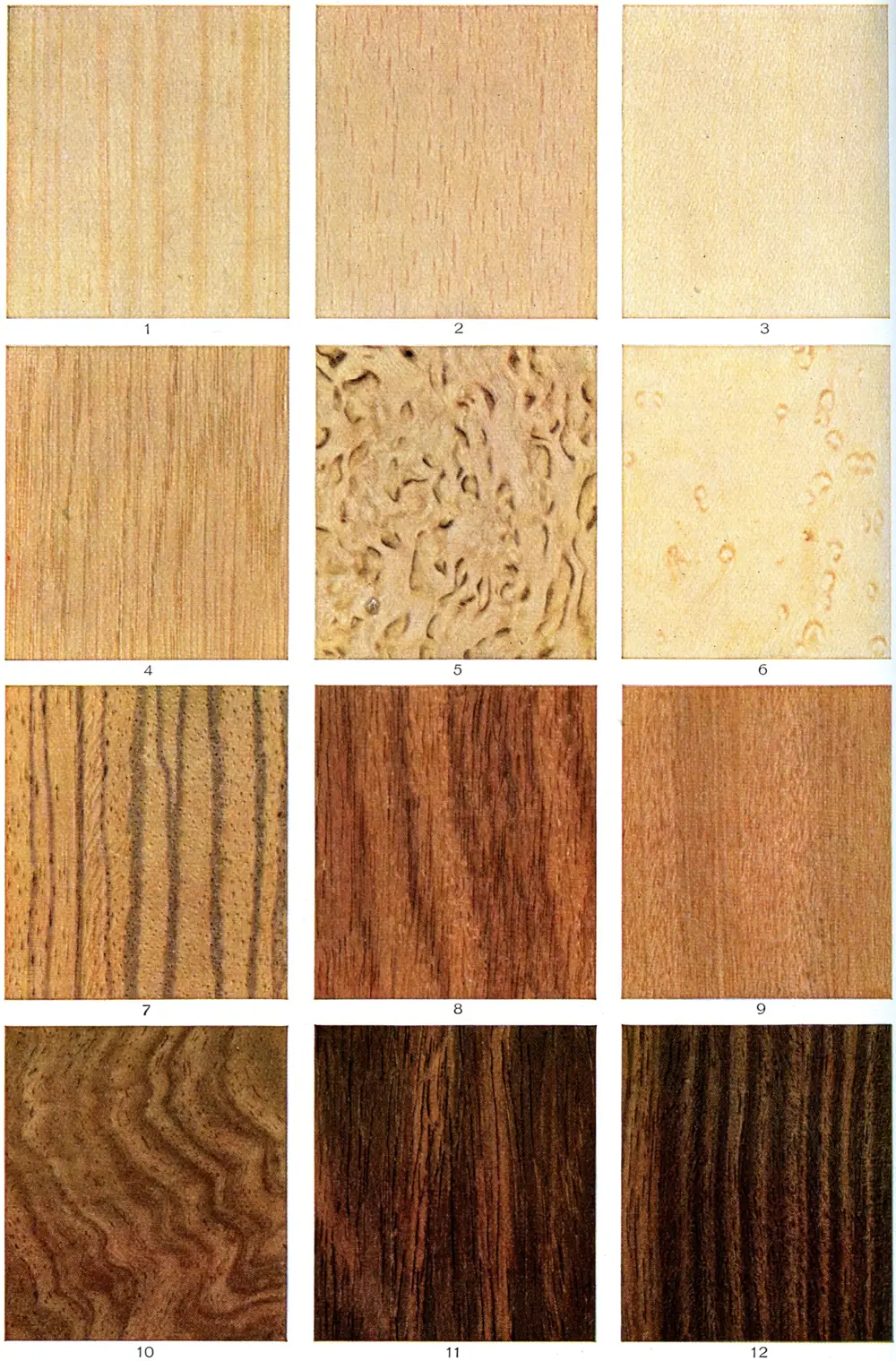
A veneered surface looks like wood because it is wood. The grain, figure, and color come from the actual species. On close inspection, the surface is a thin layer over a different core, and the edge of a veneered panel usually shows a seam where the veneer meets the substrate.
Because the layer is thin, it cannot be sanded as aggressively as solid wood. Light sanding and refinishing are possible, but the veneer will eventually wear through if sanded too often.
Where Is Wood Veneer Commonly Used?
- Furniture faces and table tops
- Cabinet doors and drawer fronts
- Wall panels and architectural surfaces
- Door skins and decorative panels
- Surfaces where real wood appearance is wanted at panel sizes
Veneer is a practical way to use expensive or figured wood efficiently. A small amount of a prized species can cover a large panel.
Advantages
- Real wood surface at lower cost than solid wood
- Large, stable panels from a stable core
- Efficient use of valuable species
- Consistent, repeatable figure and matching
- Warmer look and feel than printed surfaces
Limitations
- Thin layer limits repeated sanding and refinishing
- Edges require banding or a solid edge
- Can be damaged more easily than laminate
- Appearance depends on core quality as well as the veneer
- Moisture behavior follows the species and the core
Veneer vs Laminate
Veneer is often confused with laminate, but they are different. Wood veneer is a thin layer of real wood. Laminate is a manufactured decorative surface made from layers of paper and resin. One is wood; the other is not.
See the direct comparison:
Common Mistakes
- Assuming veneer is fake because it is thin
- Confusing veneer with laminate
- Sanding veneered surfaces as if they were solid wood
- Judging a veneered piece without checking the core beneath
References
See the References section for the sources used to write this page.