
Quick Answer
Solid wood is wood that is cut directly from a tree and used as a single piece, with the grain running continuously through the board. It is not built up from fibers, particles, or veneers. Solid wood is valued for its strength, its repair and refinishing potential, and the way it looks and ages, but it moves with humidity and its properties vary by species and grade.
What Is Solid Wood Made From?
There is no manufacturing step in the same sense as engineered panels. A log is sawn into boards, and those boards are dried — usually in a kiln — until their moisture content reaches a stable level for the intended use. The board is then planed and cut to size.
Because nothing is reassembled, the board keeps the tree’s natural structure: growth rings, grain direction, and the strength that runs along those fibers. That continuity is what separates solid wood from a panel such as MDF or plywood, where wood elements are broken down and re-bonded.
What Does Solid Wood Look Like?
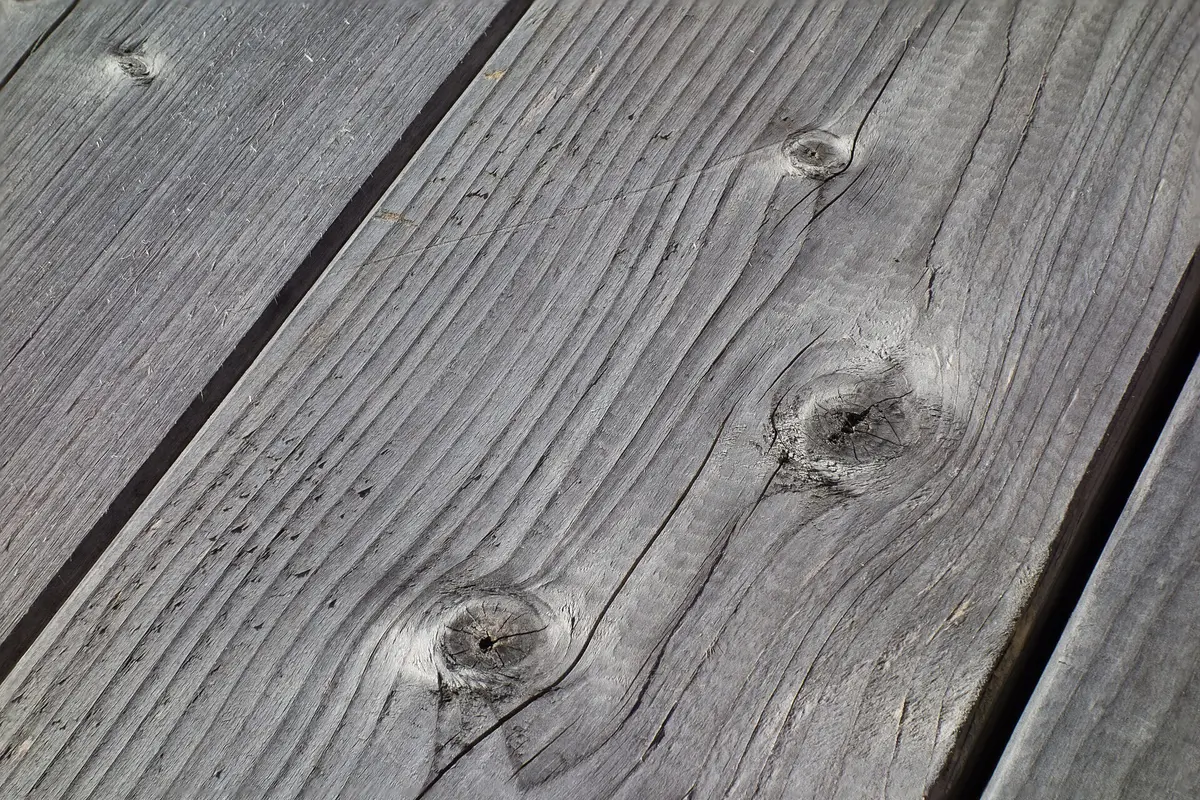
Solid wood shows real grain on every surface, and that grain continues through the edge and end of the board. In a table top or a chair leg, the pattern you see on the face relates to the growth of the tree, not to a printed or applied surface.
That also means solid wood is not perfectly uniform. Knots, color variation, and grain changes are part of the material, and two boards of the same species can look quite different.
Where Is Solid Wood Commonly Used?
- Table tops and chair frames
- Doors, trim, and moldings
- Cabinet face frames and drawer fronts
- Flooring and stair components
- High-wear furniture parts that may be refinished
Solid wood is often combined with engineered panels in the same piece of furniture — a solid wood frame with a veneered panel, for example.
Advantages
- Can usually be sanded and refinished
- Strong along the grain
- Repairable for many defects
- Natural appearance that ages well
- Long lifespan when properly maintained
Limitations
- Moves with changes in humidity
- Usually more expensive than engineered panels
- Can warp, cup, or split if not dried or used correctly
- Width is limited by the size of the tree
- Properties vary widely by species and grade
Does Solid Wood Move?
Yes. Wood is hygroscopic, meaning it exchanges moisture with the surrounding air. As humidity rises and falls, wood swells and shrinks, mostly across the grain. That is normal behavior, not a defect, and furniture is designed around it.
Solid wood moves more noticeably than most engineered panels because the fibers all run one way. Good design and proper finishing account for this movement.
Solid Wood vs Related Materials
Solid wood is the baseline that engineered products are compared against. Engineered wood is a broad category of products built from wood elements. Wood veneer is a thin layer of real wood bonded to a core, giving the look of solid wood without a solid board.
Compare directly:
Common Mistakes
- Assuming “solid wood” means the whole piece is one board; glued-up panels are common
- Expecting solid wood not to move with the seasons
- Assuming solid wood is always better for every part of every project
- Ignoring species and grade when judging strength or durability
References
See the References section for the sources used to write this page.