
Quick Difference
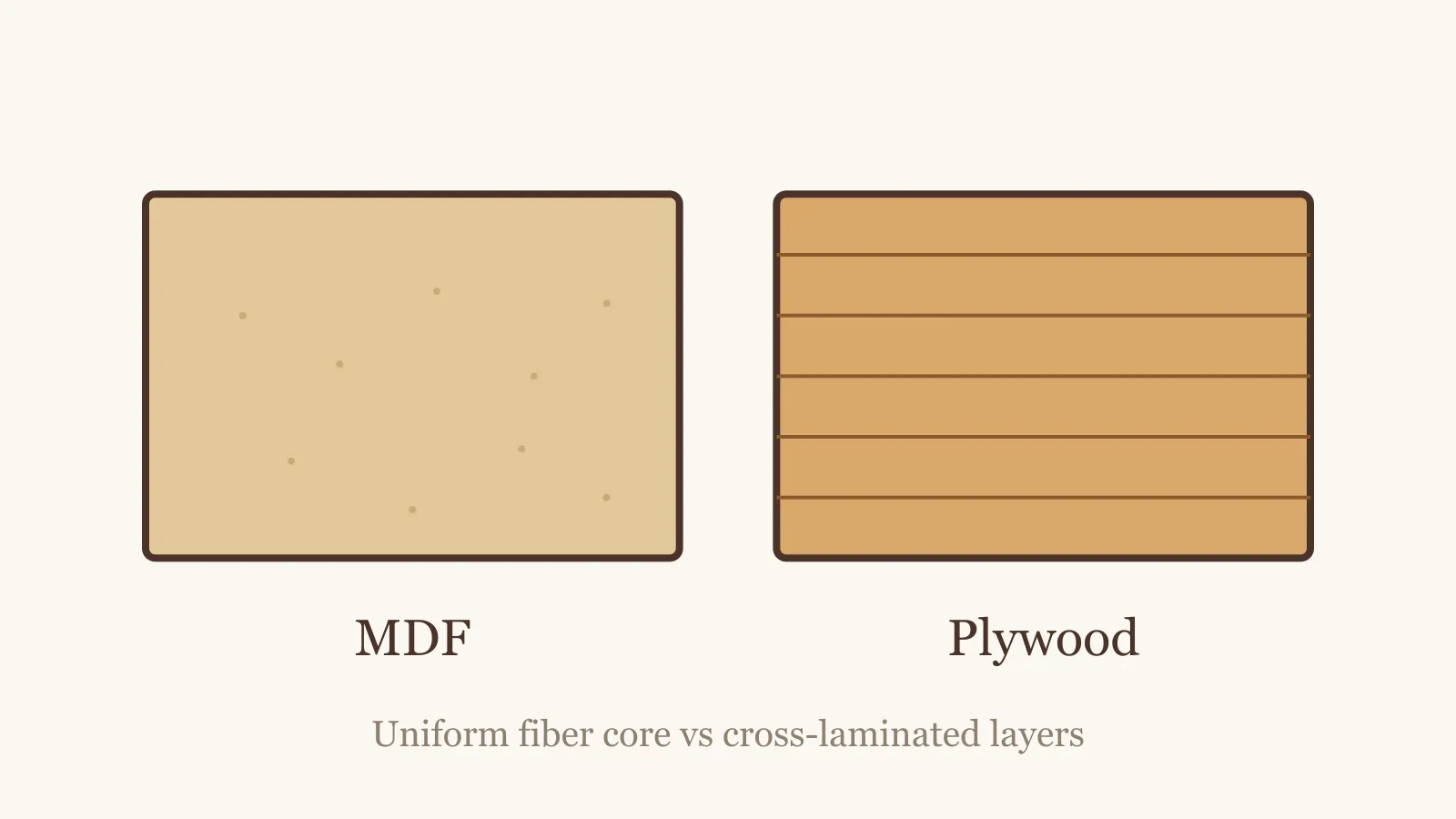
MDF and plywood are both engineered wood panels, but they are built differently. MDF is pressed from wood fibers and has a smooth, uniform core that machines and paints beautifully. Plywood is built from cross-laminated veneers, which makes it stronger, better at holding screws, and more tolerant of moisture. For painted furniture, MDF often wins; for strength and fasteners, plywood usually does.
What Is MDF?
MDF is a fiberboard made from refined wood fibers bonded with resin. It has no grain and no layers, which gives it a smooth surface that paints evenly and machines cleanly. It is dense and heavy, and standard grades are not moisture resistant. See What Is MDF?.
What Is Plywood?
Plywood is made from thin wood veneers glued in alternating grain directions. The cross-lamination gives it strength in multiple directions, good dimensional stability, and strong screw holding. Its edges show the layers and usually need banding. See What Is Plywood?.
Construction
The construction is the core difference. MDF is a homogeneous mass of fibers with no direction. Plywood is a stack of veneers whose grains cross at right angles. That single difference drives almost everything else: how each panel machines, how it holds fasteners, and how it responds to moisture.
Surface and Finishing
MDF’s smooth, grain-free face is excellent for paint. There is no grain to telegraph through the finish, and edges stay clean when routed.
Plywood’s face shows the grain of its outer veneer. It can be painted, but the grain may show through unless filled or primed, and the layered edges must be banded or covered.
Strength and Screw Holding
Plywood is generally stronger for its weight and holds screws well, including near edges. MDF holds screws in its face but is weaker at the edges and can split if a screw is driven too close to them. Where fasteners are doing structural work, plywood is the safer default.
Moisture Performance
Standard MDF swells when saturated and should not be considered waterproof. Plywood is more tolerant, and exterior or marine grades are made for wetter conditions. Even so, the specific grade matters more than the general name for both materials.
Weight
MDF is dense and noticeably heavy. Plywood is usually lighter for the same thickness, which can matter in large cabinets or wall-hung furniture.
Machining
MDF machines cleanly and takes routed profiles well, which is why it is popular for painted doors with shaped details. Plywood machines well too, but its layered edges show and need treatment.
Typical Uses
MDF suits painted cabinet doors, interior trim, and panels where a smooth painted or laminated surface is wanted. Plywood suits cabinet carcasses, drawer boxes, shelving, and structural panels where strength and fasteners matter.
Which Is Better for Painted Furniture?
MDF is usually the better choice for painted furniture. Its smooth, grain-free surface produces a flawless paint finish, and it machines cleanly for detailed profiles.
Which Is Better for Shelves?
Plywood generally makes better shelves, especially long or heavily loaded ones, because it is stiffer and holds screws well. MDF shelves can sag over long spans unless supported.
Which Handles Moisture Better?
Plywood handles moisture better in general, and rated grades extend that advantage. Standard MDF is the more moisture-sensitive of the two.
Which Is Easier to Finish?
MDF is easier to paint smoothly. Plywood is easier to finish with a clear coat if you want the grain to show. The “easier” answer depends on the finish you want.
Which Should You Choose?
Choose MDF for smooth painted surfaces, routed details, and budget-friendly interior panels. Choose plywood for strength, screw holding, moisture tolerance, and structural use. Many well-made pieces combine both — a plywood carcass with MDF painted doors.
References
See the References section for the sources used to write this page.