
Quick Answer
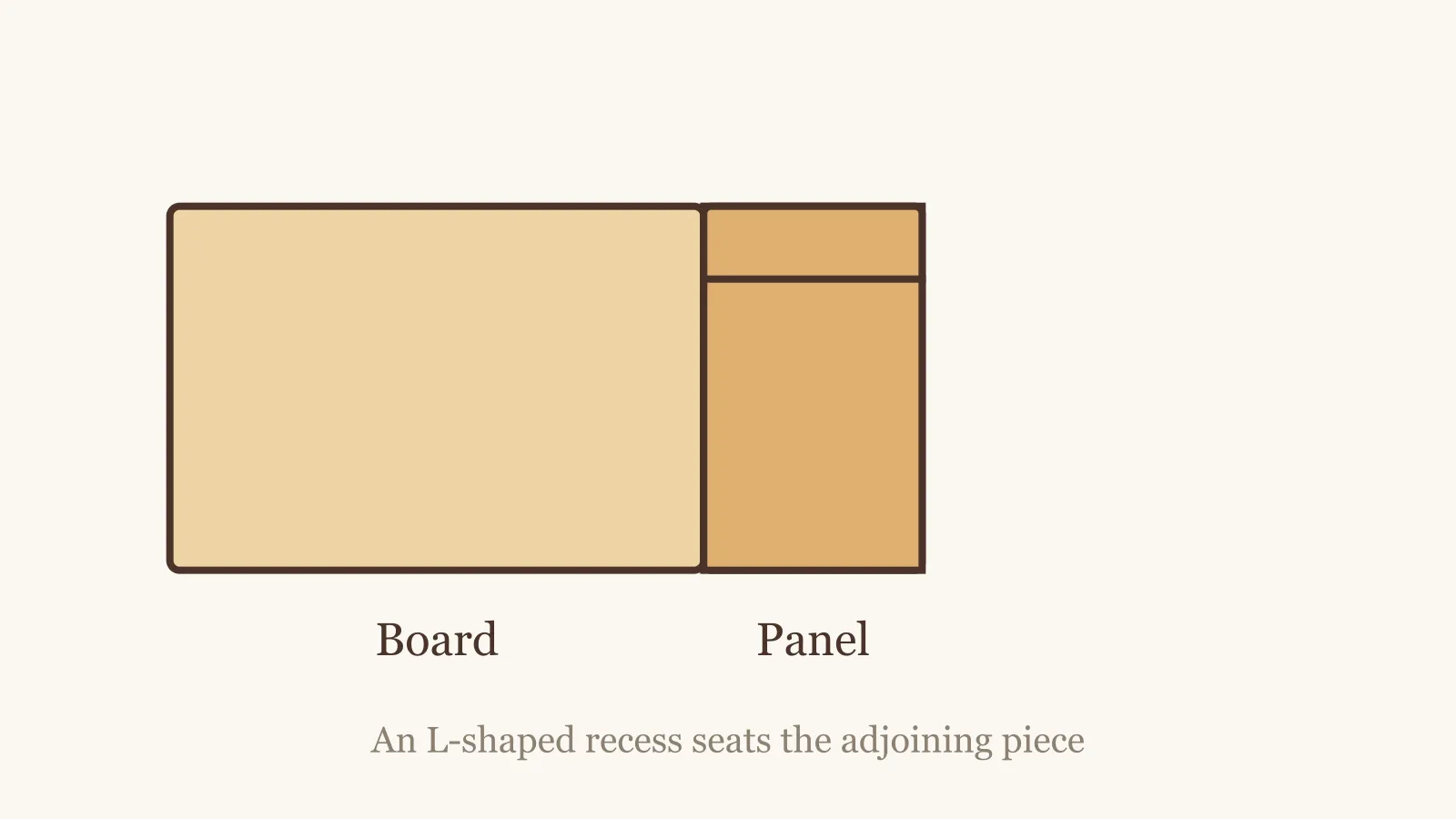
A rabbet joint — also spelled rebate — is a joint in which an L-shaped step is cut along the edge of one piece, and another piece seats into that step. The recess registers the second piece and adds gluing surface. Rabbets are used for cabinet backs, drawer construction, and the edges of panels.
How a Rabbet Joint Works
A rabbet is a rectangular channel cut along the edge or end of a board. The depth of the channel matches the thickness of the mating piece, and the width matches how far that piece overlaps. The mating piece drops into the recess and is glued or fastened in place.
The shoulder of the rabbet registers the second piece, keeping it square and positioned. The walls of the recess add face-to-face and edge-to-edge glue area that a plain butt joint lacks.
Where It Is Used
- Cabinet backs set into a recess
- Drawer boxes, joining sides to the front and back
- Panel edges and frame construction
- Shelves and dividers with edge support
- Glass and panel retention in frames
Why the Geometry Works
The rabbet converts a butt joint’s weak end-grain contact into a seated joint with a shoulder. The shoulder carries some of the load in compression, and the two faces of the recess bond to the mating piece along the grain. The recess also hides the seam on one side.
The joint is still an open joint — it has no interlock — so it is usually glued and often reinforced with fasteners.
Main Variations
- Single rabbet along one edge
- Double rabbet, stepped from both faces
- Stopped rabbet, where the cut does not run the full length
Advantages
- Registers the mating piece and helps keep it square
- More glue surface than a butt joint
- Simple to cut on a table saw or router
- Hides one side of the seam
- Good for panels and cabinet backs
Limitations
- No mechanical interlock
- Removes material from the board edge
- Weaker than a dado in some loading directions
- Exposed seam on one face
- Fit depends on accurate cutting
Rabbet vs Related Joints
A dado is a similar channel but cut across the grain in the middle of a panel, while a rabbet is cut along an edge. A lap joint overlaps both pieces; a rabbet seats one piece into the other.
Related pages:
Common Mistakes
- Confusing a rabbet with a dado based on where it is cut
- Relying on a rabbet alone without glue or fasteners
- Cutting the recess too deep and weakening the board
- Expecting a rabbet to resist pull-apart like a dovetail
References
See the References section for the sources used to write this page.