
Quick Answer
A drawer slide is the hardware that mounts a drawer to a cabinet and lets it open and close smoothly while supporting its weight. A slide has two main parts: one fixed to the cabinet and one fixed to the drawer, with a mechanism — rollers or ball bearings — between them. Slides differ by mounting style, extension, and load rating.
How a Drawer Slide Works
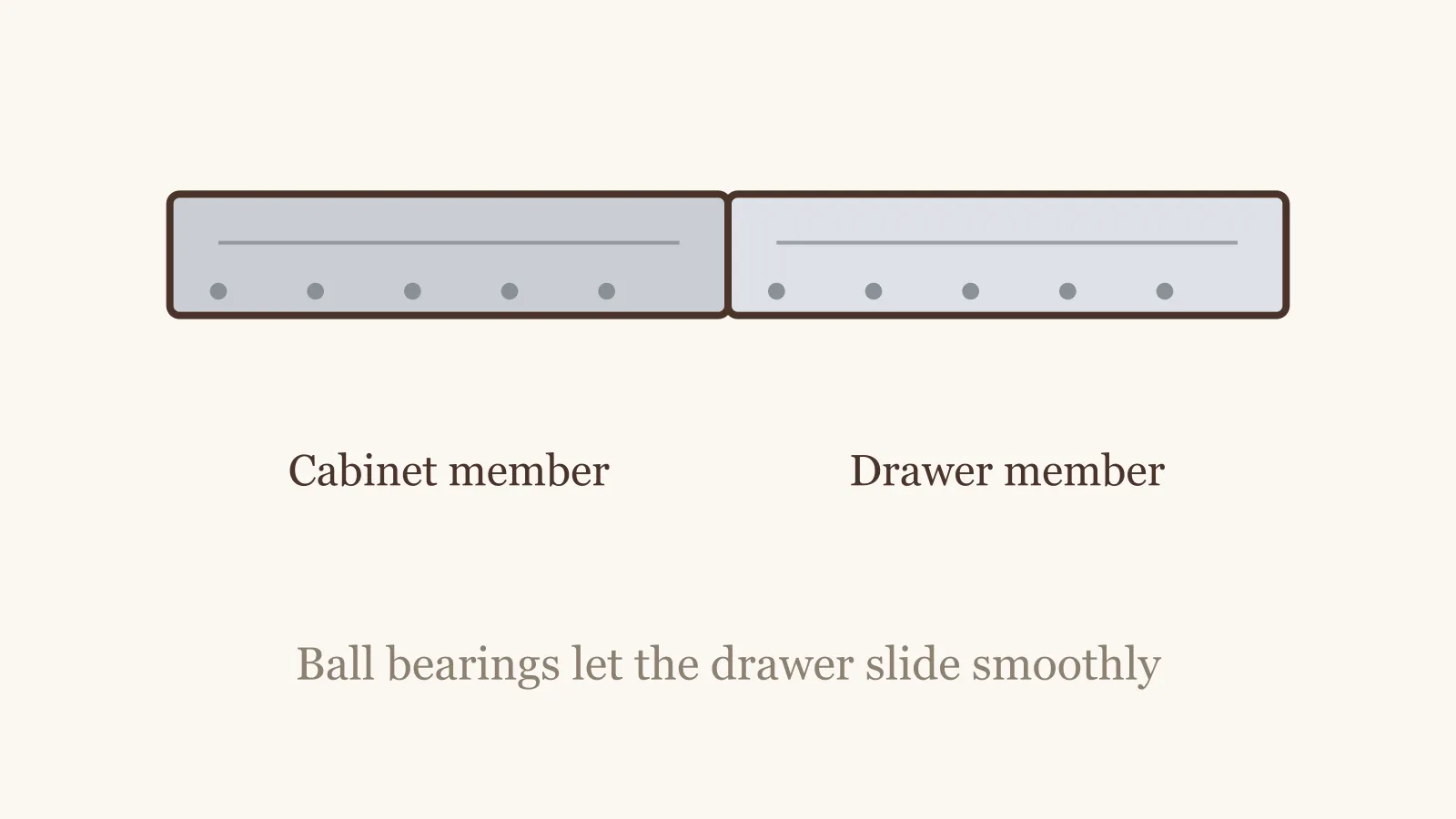
A typical slide consists of two or more telescoping metal members. The outer member mounts inside the cabinet, and the inner member screws to the side of the drawer. As the drawer is pulled, the members extend, rolling or sliding against each other.
The slide supports the drawer and keeps it moving in a straight line. The mechanism — rollers, ball bearings, or an undermount runner — determines how smoothly it moves and how much weight it can carry.
Main Types
- Roller slides, using nylon rollers; inexpensive and common
- Ball bearing slides, smoother and rated for heavier loads
- Undermount slides, hidden beneath the drawer and mounted to its bottom
- Side-mount slides, the familiar visible hardware on the drawer sides
Each type has different load ratings, extension lengths, and mounting requirements. The manufacturer’s load rating and installation instructions take priority over general descriptions.
What the Numbers Mean
Drawer slides are usually specified by length and load rating. The length must match the drawer depth, and the load rating should suit what the drawer will hold. A slide rated for a light load will fail early if the drawer is overloaded.
Where Drawer Slides Are Used
- Kitchen and bathroom cabinet drawers
- Desk and office furniture drawers
- Toolboxes and workshop storage
- Any furniture with a moving drawer
Advantages
- Smooth, controlled drawer movement
- Supports heavy loads when correctly rated
- Available in many lengths and ratings
- Soft-close and push-to-open options exist
- Replaces older wood-on-wood runners
Limitations
- Must be rated and mounted correctly for the load
- Side-mount slides reduce the drawer width slightly
- Misaligned mounting causes sticking or premature wear
- Quality and rating vary widely between products
Common Mistakes
- Confusing the slide with the drawer box
- Choosing a slide by length without checking its load rating
- Mounting slides out of square and causing binding
- Assuming all ball bearing slides are rated the same
References
See the References section for the sources used to write this page.