
Quick Answer
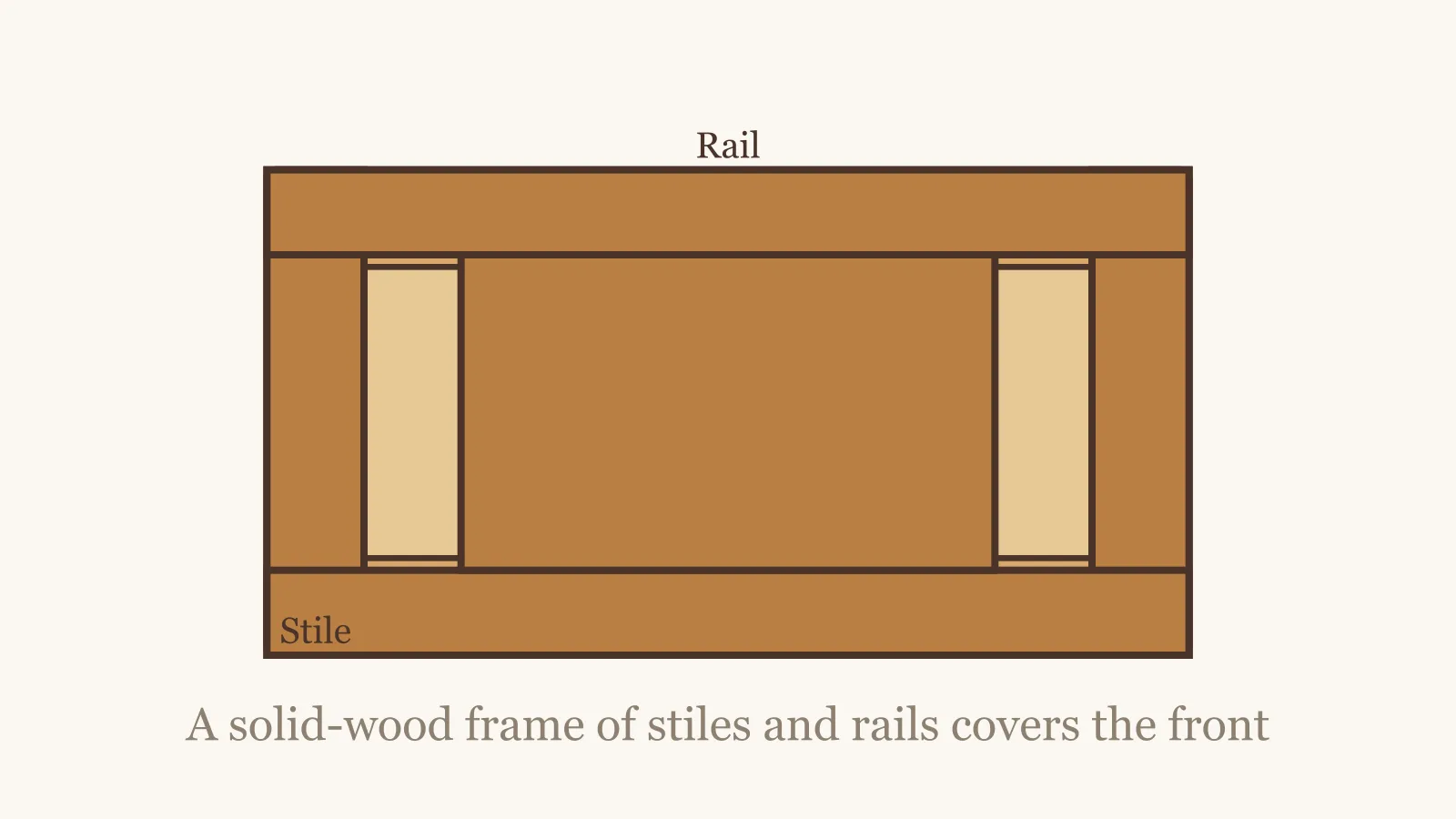
A face frame cabinet is a cabinet whose box has a solid-wood frame attached to its front. The frame is built from vertical stiles and horizontal rails, and it covers the raw front edges of the cabinet panels. Doors and hinges are mounted to the frame. This is the traditional style of cabinet construction in North America.
How a Face Frame Cabinet Is Built
The cabinet box — the carcass — is assembled from panels, typically plywood. A separate frame, made from solid wood stiles (vertical) and rails (horizontal), is then attached to the front of the box. The frame is joined with methods such as pocket screws, mortise and tenon, or dowels.
Doors are mounted onto the frame, and the hinges attach to the stiles. Because the frame carries the doors, the box itself can be simpler, and the frame adds rigidity to the cabinet.
What the Frame Does
- Covers the raw front edges of the panels
- Provides a mounting surface for doors and hinges
- Adds rigidity and strength to the cabinet
- Defines the visible opening size of each cabinet
- Creates the traditional framed look
Face Frame vs Frameless
The main alternative is the frameless cabinet, which has no front frame at all. In a frameless cabinet, the panels themselves form the front edges, and doors are mounted directly to the panels.
The choice affects appearance, hardware, and the size of the usable opening. A face frame reduces the opening slightly, while a frameless cabinet typically offers more uninterrupted access.
Advantages
- Traditional appearance
- Solid-wood frame adds rigidity
- Forgiving to install and adjust
- Conceals panel edges
- Wide range of hinge styles available
Limitations
- The frame reduces the size of the opening
- More material and labor than frameless construction
- Frame joints can loosen over time if poorly made
- The frame is a separate assembly that must be aligned
Common Mistakes
- Confusing a face frame with the cabinet box itself
- Assuming face frame means better quality automatically
- Ignoring the reduced opening size when planning storage
- Judging a cabinet without checking the frame joinery
References
See the References section for the sources used to write this page.