
Quick Answer
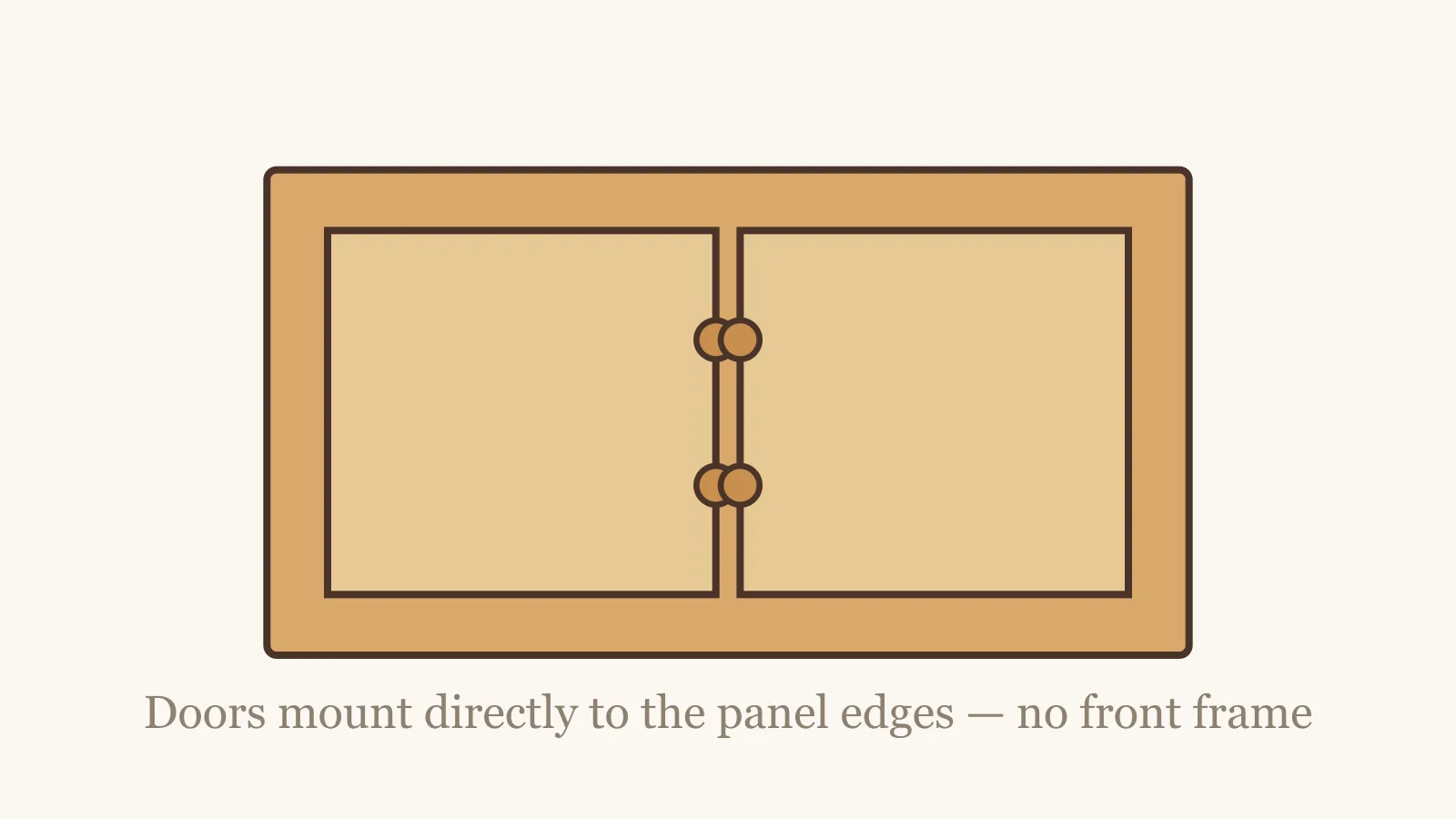
A frameless cabinet is a cabinet with no front frame. The panels of the cabinet box form the front edges, and doors and hinges are mounted directly to those panel edges. This style — also called full-access or European-style construction — offers larger, unobstructed openings and is the standard approach in much of modern cabinetry.
How a Frameless Cabinet Is Built
The cabinet box is assembled from edge-banded panels, usually melamine-faced particle board or plywood. Because there is no frame, the cut edges of the panels must be finished — edge banding is essential.
Doors mount directly onto the panels with concealed hinges, often cup hinges that clip onto a plate fixed inside the cabinet. Drawers run on slides mounted to the panel sides.
What Frameless Construction Means
- The panel edges are visible and must be banded
- Doors cover the full front of the cabinet
- Hinges and slides mount directly to the panels
- Openings are as large as the cabinet box allows
- The look is flush, flat, and modern
Frameless vs Face Frame
A face frame cabinet adds a solid-wood frame to the front, which reduces the opening and provides a traditional look. A frameless cabinet skips the frame, maximizing access and creating a cleaner, flush front.
The difference is construction style, not quality. Both can be made well or poorly, and both are built from similar panels.
Advantages
- Larger, unobstructed openings
- Flush, modern appearance
- No separate frame to align or loosen
- Standard concealed hinges work well
- Efficient use of sheet materials
Limitations
- Panel edges must be well banded and durable
- Less forgiving to install if the box is out of square
- Edges can be damaged by repeated impact
- Hardware mounts in panel material, so core quality matters
Common Mistakes
- Assuming frameless means higher or lower quality automatically
- Ignoring that panel core quality decides hinge and screw holding
- Confusing frameless with face frame construction
- Overlooking the importance of edge banding in this style
References
See the References section for the sources used to write this page.