
Quick Answer
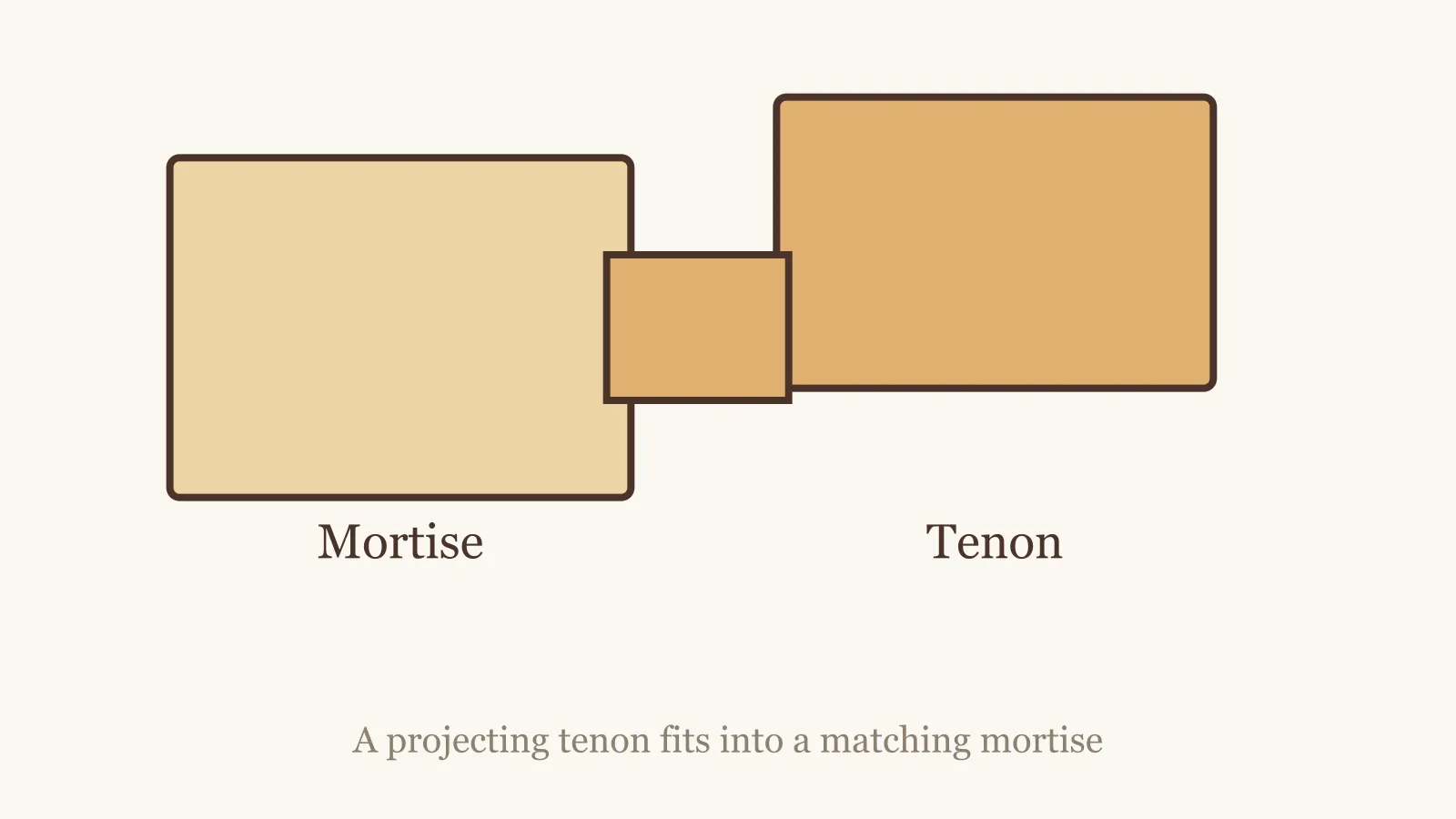
A mortise and tenon joint connects two pieces by fitting a rectangular projection — the tenon — on one piece into a matching cavity — the mortise — cut into the other. The fit aligns the parts, resists movement, and provides a large glued surface. It is one of the oldest and most widely used joints in woodworking, especially for chair and table frames, doors, and timber structures.
How a Mortise and Tenon Joint Works
One piece has the mortise: a cavity cut into its face or edge. The other piece has the tenon: a reduced tongue cut on its end, sized to fit the mortise. The tenon slides into the mortise, and glue bonds the long-grain surfaces of the tenon to the walls of the mortise.
The joint resists several forces at once. The shoulders of the tenon bear against the face of the mortised piece, resisting compression. The long-grain glue surfaces resist being pulled apart. When pinned or wedged, the joint gains mechanical locking as well.
Where It Is Used
- Chair and table frames, joining rails to legs
- Door frames, joining rails to stiles
- Timber framing in buildings
- Beds and other furniture where rails meet posts
Why the Geometry Works
The strength comes from surface area and fit. A well-fitted tenon presents four long-grain faces for glue, plus shoulders that register the joint and resist twisting. The mortise walls brace the tenon on all sides, so the joint does not rely on end grain, which glues poorly.
Actual strength depends on wood species, joint fit, grain direction, adhesive, workmanship, and loading direction. A loose tenon in a sloppy mortise performs far below a properly fitted one.
Main Variations
- Through mortise and tenon, where the tenon passes all the way through
- Blind mortise and tenon, where the tenon is hidden inside the joint
- Haunched tenon, with a small step that resists twisting near the edge
- Loose tenon, where a separate piece of wood joins two mortises
Advantages
- Large, efficient glue surface along the grain
- Shoulders resist compression and twisting
- Strong in multiple loading directions
- Time-tested across centuries of furniture
- Can be pinned or wedged for mechanical locking
Limitations
- Requires accurate cutting for a good fit
- Hand-cutting takes skill and time
- The joint can loosen if wood shrinks away from the tenon
- Fit quality matters more than the joint name
Mortise and Tenon vs Related Joints
A dowel joint also aligns two parts but relies on small round pins rather than a solid tongue. A lap joint overlaps two pieces but has no tenon in a mortise. The mortise and tenon provides both alignment and a large glued surface.
Related pages:
Common Mistakes
- Claiming mortise and tenon is always stronger than every alternative
- Ignoring the effect of a loose fit on strength
- Using a short or thin tenon where a longer one is needed
- Judging the joint without considering grain direction
References
See the References section for the sources used to write this page.