
Quick Answer
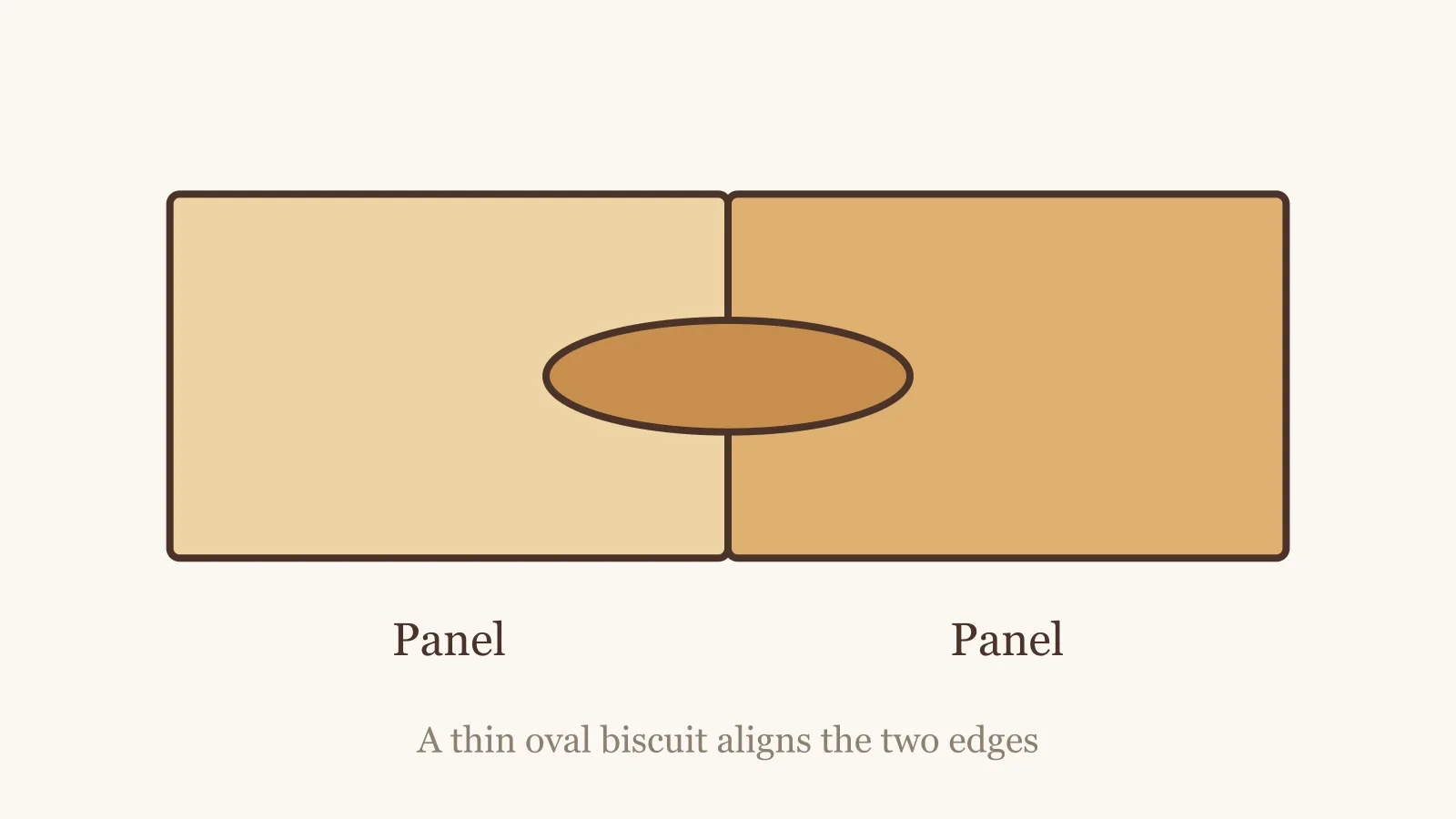
A biscuit joint joins two pieces using a thin, football-shaped piece of compressed wood called a biscuit. A slot is cut into each matching edge with a biscuit joiner, glue is applied, and the biscuit is placed in the slots. When the biscuit absorbs moisture from the glue, it swells and locks into place. Biscuit joints are used mainly to align panels and board edges during glue-up.
How a Biscuit Joint Works
A biscuit joiner cuts a crescent-shaped slot in each of the two pieces to be joined. The compressed beech biscuit is inserted with glue into one slot, and the other piece is pressed on so the biscuit bridges the joint.
The biscuit itself is loose in the slot until it absorbs moisture from the glue, at which point it swells and fills the slot tightly. That swelling, plus the glued faces of the slot, is what holds the joint.
The biscuit’s main job is alignment, not strength. It keeps panel edges flush and stops them from sliding apart during clamping, but it adds only modest glue surface.
Where It Is Used
- Aligning board edges in glued-up panels and tabletops
- Positioning face frames and carcass parts
- Registration during assembly of cabinets
- Repair and reinforcement of flat joints
Why the Geometry Works
The biscuit works by bridging the joint line inside matching slots. Because it is oval and the slots are aligned from the same reference face, the biscuit pulls the two surfaces into the same plane. The swelling of the biscuit adds a mechanical tightness that a loose fit would lack.
Actual strength comes mostly from the face-to-face glue of the boards themselves. The biscuit contributes alignment and a little extra glued area, not a strong mechanical lock.
Advantages
- Fast and forgiving to machine
- Excellent alignment of panel edges
- Minimal setup compared with dowels
- Hidden inside the joint
- Helps keep long panels flush during glue-up
Limitations
- Adds limited strength compared with dowels or tenons
- Biscuits are thin and can be over-stressed
- Slots can telegraph through very thin stock
- Requires the biscuit joiner tool
- Not a substitute for a structural joint
Biscuit vs Related Joints
A dowel joint uses round pins and generally provides more glued surface and strength. A mortise and tenon is a structural joint with far more strength. A biscuit is best understood as an alignment and registration aid.
See the direct comparison:
Common Mistakes
- Relying on biscuits for structural strength
- Confusing a biscuit with a strong spline or tenon
- Cutting slots too deep or too shallow
- Using biscuits where dowels or a tenon are needed
References
See the References section for the sources used to write this page.